
Mast Cell Activation Syndrome (MCAS)
From Dickson Chemist
What is Mast Cell Activation Syndrome (MCAS)?
Mast Cell Activation Syndrome (MCAS) is a condition where mast cells — a type of immune cell — release chemicals inappropriately, causing sudden and sometimes severe symptoms across different body systems. Unlike typical allergic reactions, MCAS episodes often occur without a clear trigger.
Symptoms may affect the skin, lungs, heart and circulation, or the digestive tract. These episodes can include swelling, flushing, abdominal pain, diarrhea, vomiting, itching, or hives. In some cases, mast cell activation can result in anaphylaxis, a life-threatening reaction that requires immediate emergency treatment.
If you develop severe symptoms such as difficulty breathing, swelling of the tongue or throat, dizziness, or collapse, use your prescribed emergency medication (such as an adrenaline auto-injector) and call 999 (or your local emergency number).
Mast Cells and Their Function
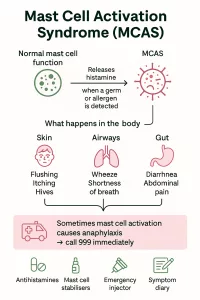
Mast cells are immune cells that normally help the body defend against infections and harmful substances. They release histamine and other mediators to trigger inflammation and clear threats. However, in MCAS, mast cells release these chemicals when there is no real danger, leading to repeated and disruptive symptoms.
Symptoms of MCAS
MCAS typically causes recurrent episodes involving two or more organ systems. Symptoms may include:
Skin: flushing, itching, hives, swelling (angioedema)
Respiratory system: nasal congestion, wheeze, shortness of breath
Cardiovascular system: low blood pressure, dizziness, fainting
Digestive system: abdominal pain, diarrhea, constipation, vomiting
Severe reaction: anaphylaxis (combination of symptoms across systems, sometimes life-threatening)
What Does a Flare Feel Like?
An MCAS episode can resemble a severe allergic reaction, but without an obvious trigger. Skin may become red, swollen, or itchy, and gastrointestinal upset is common. Some reactions are intense enough to cause dangerous drops in blood pressure and airway swelling.
What Causes MCAS?
The exact cause is not fully understood. In allergies, mast cells are activated by a specific allergen (such as pollen or peanuts). In MCAS, mast cells appear to be hypersensitive and can release mediators unpredictably, often without any identifiable trigger. Stress, illness, or environmental changes may sometimes contribute. We also see people who have developed this condition post Covid-19 infection or vaccination. The cause is not well understood.
Diagnosis
MCAS is diagnosed based on a combination of:
Recurrent episodes of symptoms affecting more than one body system.
Evidence of mast cell activation (such as raised tryptase levels during flares, so testing is impractical for most people).
Response to mast cell-targeted treatment.
Your clinician may also arrange some other tests to rule out other allergic or auto-inflammatory conditions.
Treatment and Management
There is no cure for MCAS, but symptoms can usually be managed with a combination of medicines and lifestyle adjustments. Treatment is often tailored to the individual and may include:
Antihistamines (H1 blockers): e.g. cetirizine, loratadine, fexofenadine.
Antihistamines (H2 blockers): e.g. famotidine, used for gastrointestinal symptoms.
Mast cell stabilisers: e.g. sodium cromoglicate, ketotifen.
Leukotriene inhibitors: e.g. montelukast.
Immunomodulators: e.g. LDN
Aspirin: which may help with flushing (used cautiously).
Biologic therapies (e.g. omalizumab): in selected cases and only when referred to a specialist consultant in a hospital setting.
Epinephrine (adrenaline): for emergency treatment of anaphylaxis.
Corticosteroids are sometimes used for severe flares but are not a long-term solution due to side effects.
At the MCAS clinic we tend to use a combination of medicines at the lowest possible effective dose, in a holistic way.
Self-Care and Safety Tips
Keep a symptom diary noting what you ate, environmental factors, and stress levels around each episode. (A free app is available here)
Inform family, friends, or colleagues about your condition and where you keep your emergency medication.
Always carry your prescribed emergency injector if you are at risk of anaphylaxis.
When to Seek Emergency Care
Call 999 immediately if you experience:
Severe breathing difficulty
Swelling of the face, lips, tongue, or throat
Sudden drop in blood pressure, dizziness, or collapse
Loss of consciousness
Outlook
MCAS is usually a long-term condition that requires ongoing management. While there is no cure, most people can reduce the frequency and severity of their symptoms with the right treatment plan. Current knowledge suggests life expectancy is not shortened, though more research is needed.
Common Questions
Is MCAS an autoimmune disease?
No, MCAS is not an autoimmune disorder.
Can it go away completely?
At present, there is no permanent cure, but symptoms can be well controlled with medication and lifestyle management.
A note from Dickson Chemist
Mast Cell Activation Syndrome can feel unpredictable and overwhelming. At Dickson Chemist, we work with patients to investigate their symptoms, provide access to appropriate treatment options, and develop individualised care plans. If you think you may be affected, speak with one of our clinical pharmacists or your healthcare provider for further assessment.